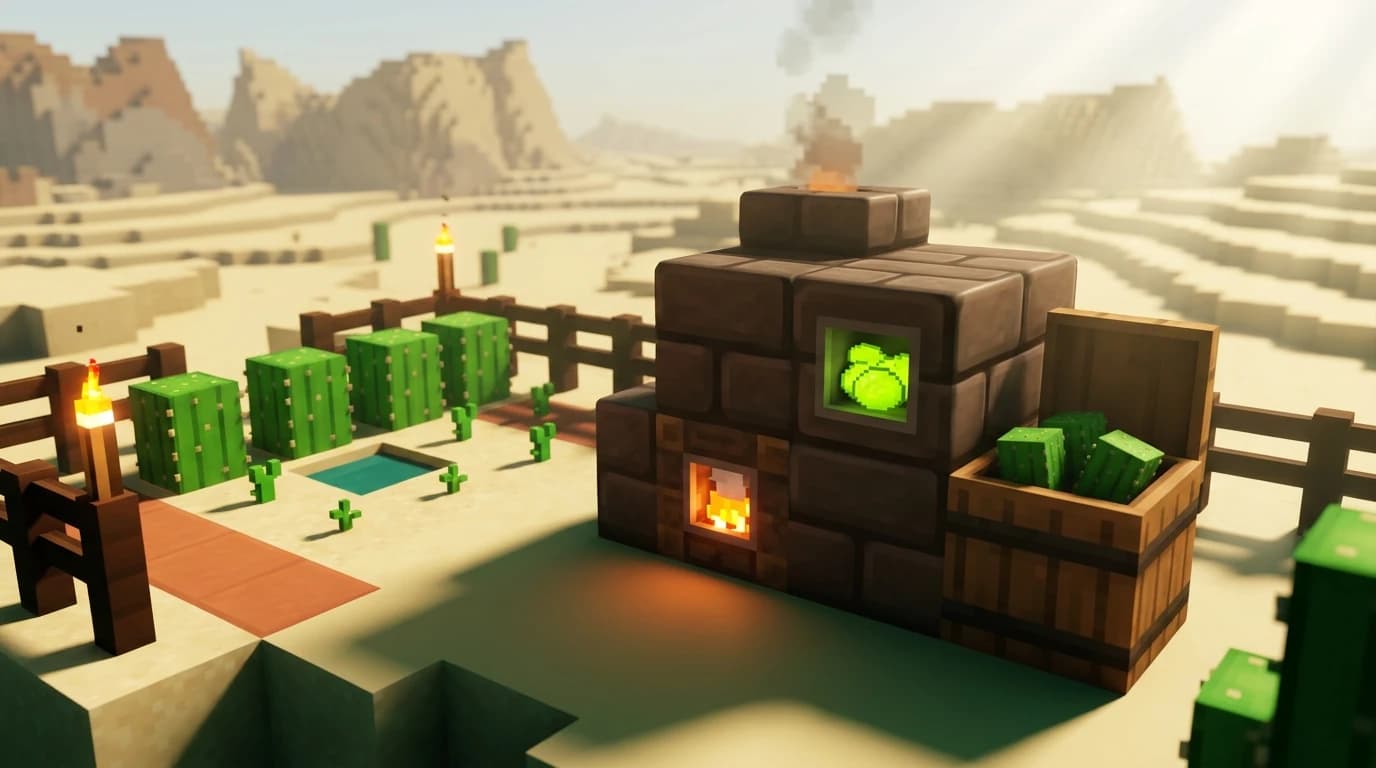
To make green dye in Minecraft, smelt 1 cactus in a furnace with fuel. The furnace produces 1 green dye. Find cactus in deserts or badlands, place it in the top furnace slot, and put fuel below. Vanilla Minecraft has no direct blue-and-yellow or kelp recipe for green dye.
How do I make green dye in Minecraft?
Green dye is made by smelting cactus. It is a furnace recipe rather than a crafting-table recipe, so you do not need a crafting grid or crafting table for the main method.
| Input | Fuel | Output |
|---|---|---|
| 1 cactus | Any furnace fuel | 1 green dye |
The cactus goes in the furnace input slot, the fuel goes in the bottom slot, and the green dye appears in the output slot after smelting finishes. One cactus gives one green dye, so collect several cactus blocks if you are coloring a large build.
What you need for the green dye recipe
- 1 cactus block for each green dye you want
- 1 furnace
- Fuel such as coal, charcoal, wood, sticks, lava, or bamboo
- A storage slot for the finished green dye
You can use a furnace, blast furnace, or smoker interface only when the device supports the recipe. Cactus is a furnace smelting ingredient, so a regular furnace is the dependable choice for this job. A crafting table is not required.
How to smelt cactus into green dye
- Place a furnace and open it.
- Put cactus in the upper input slot.
- Put fuel in the lower fuel slot.
- Wait for the smelting arrow to fill.
- Move the green dye from the output slot into your inventory.
Where to find cactus for green dye
Cactus naturally generates in desert and badlands biomes. Desert villages can also contain cactus, making them useful places to check when you find a settlement in a dry biome. Break the cactus carefully because touching it damages you, and avoid placing it beside solid blocks that would cause it to break.
Once you find one cactus, bring it home and plant it on sand or red sand. Cactus grows vertically, so leave open space around every side. You can break the upper growth while leaving the bottom block planted, then return later for more cactus.
Build a simple cactus supply
- Place sand or red sand in a row.
- Plant one cactus on each sand block.
- Leave the four horizontal sides of every cactus clear.
- Wait for the plants to grow.
- Break the upper cactus blocks and replant or leave the bottom blocks intact.
For a larger supply, use a cactus farm that breaks the upper sections automatically and sends the drops into storage. Smelt the collected cactus in several furnaces when you need dye quickly.
How to get green dye without cactus
There is no normal crafting recipe that combines other dyes into green dye. Blue dye plus yellow dye does not make green dye in vanilla Minecraft, and kelp does not produce green dye when smelted. If you cannot find cactus, use one of the alternate ways to obtain the finished item.
- Wandering trader: A wandering trader can offer 3 green dye for 1 emerald. The offer is random, so check each trader before it disappears.
- Desert village chest: A chest in a desert village house can contain green dye. This is useful for obtaining a small amount without smelting cactus, but it is not a reliable bulk source.
- Commands or creative mode: If commands are enabled, you can give yourself green dye directly. This is not a survival crafting method.
The most reliable alternative is usually to find a wandering trader, but the trader's offers are not guaranteed. If you need a renewable supply, obtaining a single cactus and growing it on sand is much better than relying on random trades or chest loot.
How to make light green dye
Minecraft calls the lighter green color lime dye. You can make 2 lime dye by combining 1 green dye with 1 white dye or 1 bone meal in a crafting grid. Place both ingredients anywhere in the grid; no special arrangement is required.
| Ingredients | Result |
|---|---|
| 1 green dye + 1 white dye | 2 lime dye |
| 1 green dye + 1 bone meal | 2 lime dye |
| 1 sea pickle + any fuel | 1 lime dye |
Sea pickles are another way to get lime dye, but they do not make regular green dye. Smelt sea pickles in a furnace when you want the bright, light-green color without first collecting green dye.
Can you make dark green dye?
There is no separate dark green dye item in vanilla Minecraft. Regular green dye is the darkest standard green dye available. You can use it directly on wool, beds, glass, terracotta, concrete powder, banners, leather armor, and other dyeable items.
If you want a darker-looking green build, choose a naturally dark green block such as green wool, green concrete, moss, vines, or certain wood and foliage blocks. Minecraft does not provide a crafting recipe that combines green dye with black dye to create a dark green dye.
What can green dye be used for?
Green dye works like the other standard dyes. Use it to change the color of blocks, decorative items, and some mob equipment.
- Dye white wool or sheep green.
- Craft green beds, green candles, and green banners.
- Make green stained glass and green terracotta.
- Craft green concrete powder using green dye, sand, and gravel.
- Dye leather armor green.
- Change the collar color of a tamed wolf or cat.
- Add green patterns to banners.
- Use green dye in firework star and sign-color recipes.
For wool projects, dyeing a sheep can save resources because you can shear the sheep repeatedly after it eats grass. For concrete, prepare the green dye before combining it with sand and gravel, since the dye is consumed during crafting.
Getting the ingredients
For a one-time project, search a desert or badlands biome and bring home several cactus blocks. For repeated projects, plant the first cactus on sand near your base and let it grow. Keep your furnace supplied with a renewable fuel such as bamboo, charcoal, or wood so the dye process does not stop.
Do not smelt kelp expecting green dye. Kelp produces dried kelp, while sea pickles produce lime dye. Also, do not waste blue and yellow dye in the crafting grid looking for green; that combination is not a vanilla recipe.